

Suiho Komebitsu
Tax included.
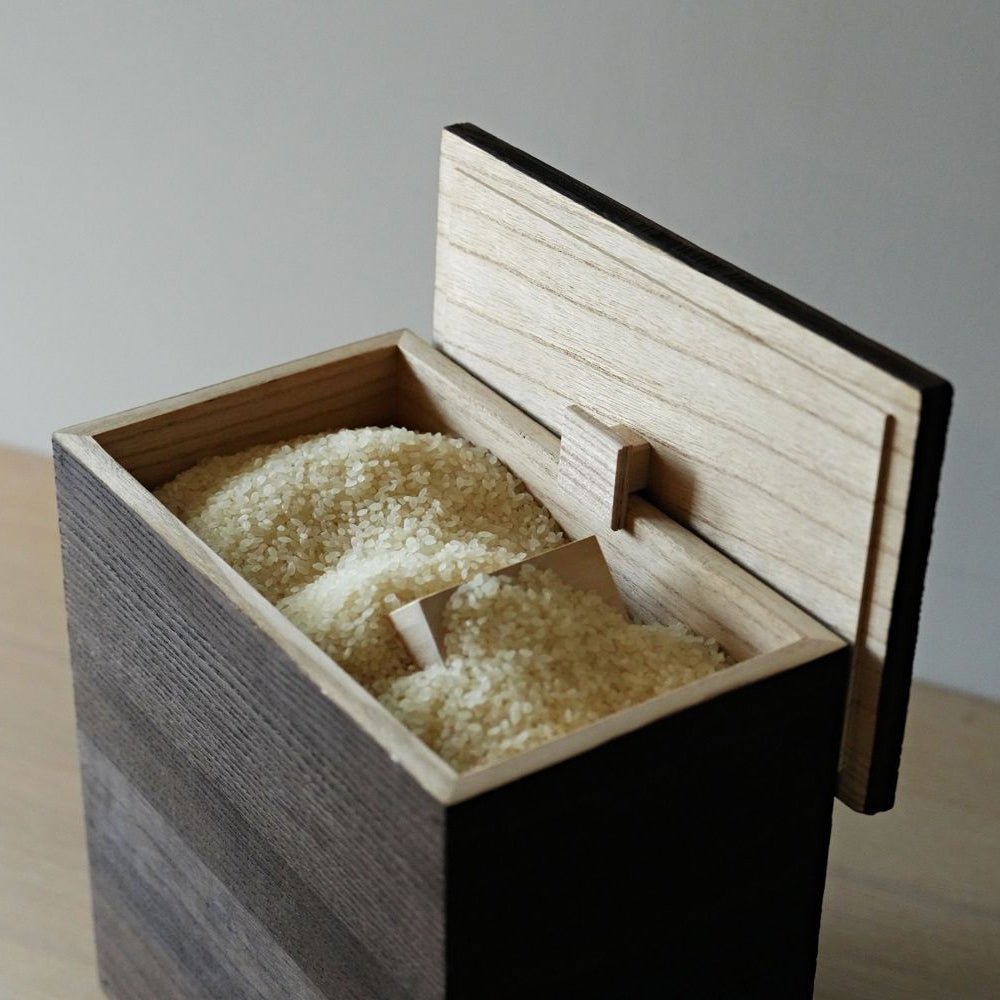
Keep your rice at its most delicious with a Kamo kiri (paulownia) rice bin.
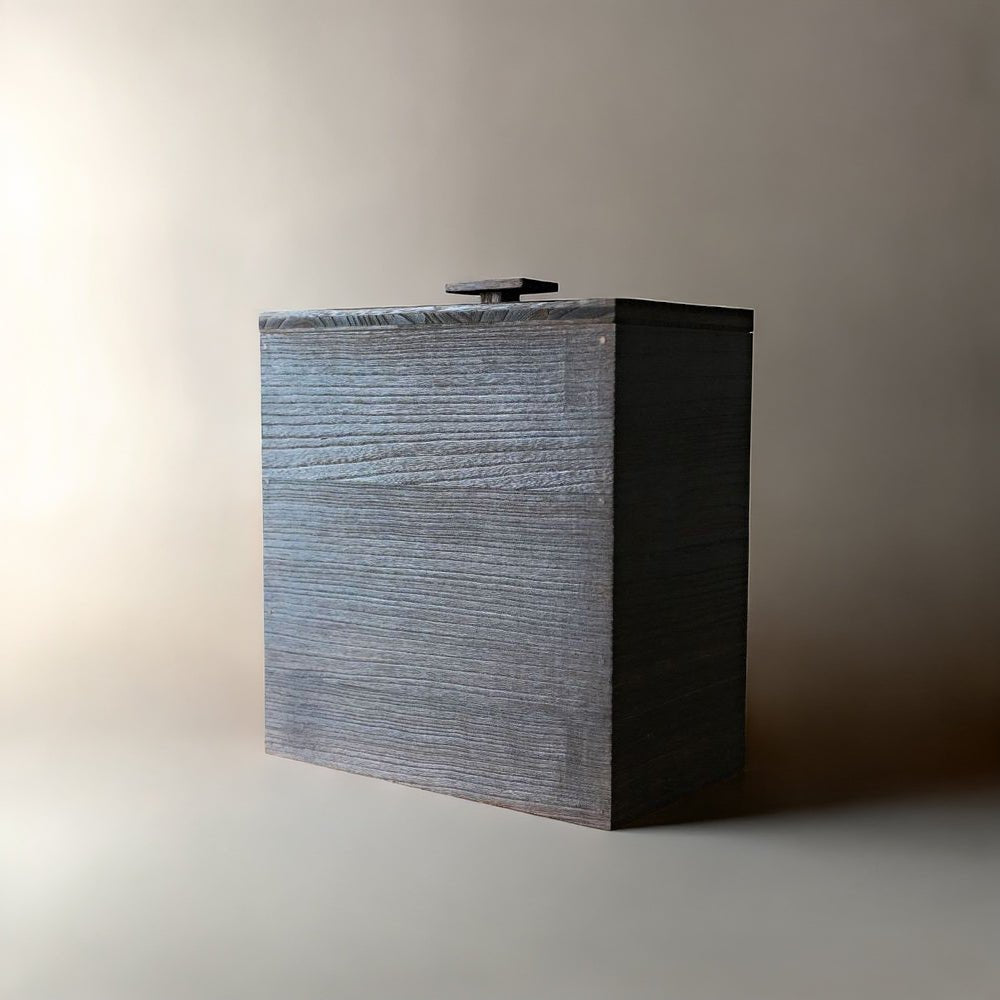
Suiho Komebitsu is a domestic paulownia-wood box that regulates humidity like a living material, keeping your everyday rice tasting its best.
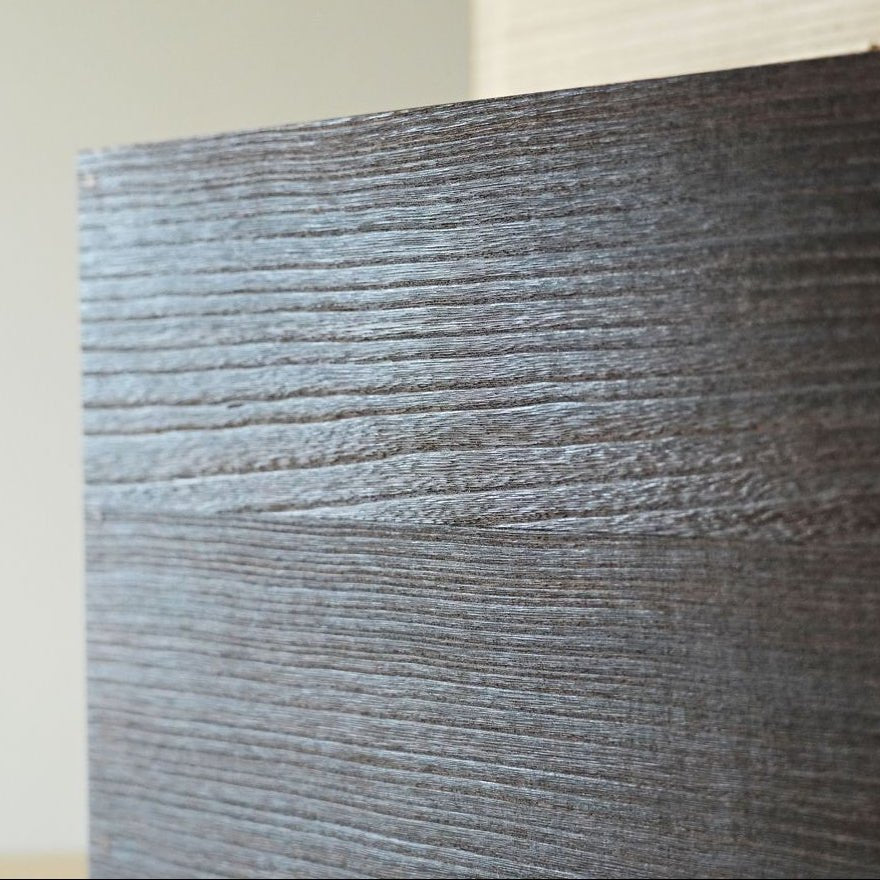
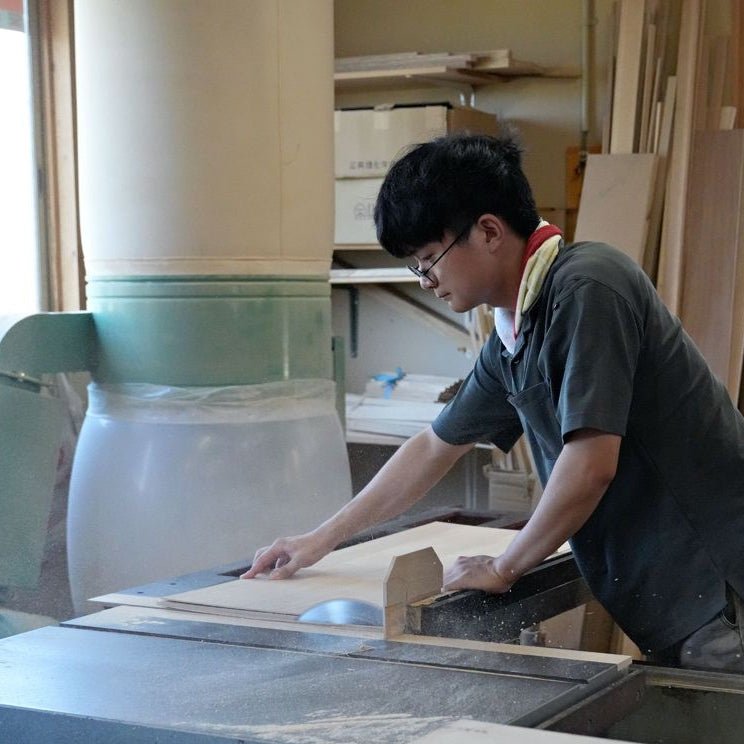
Built in Kamo, Niigata Prefecture — home to 200 years of paulownia chest-making craftsmanship — each bin is wood-pegged by hand, piece by piece, and finished on every outer surface with a flame-seared "yaki-kiri" finish.
Suiho Komebitsu sets the stage for cooking the most delicious rice possible.
Depth: 280mm
Width: 165mm
Height: 320mm (including lid)
Capacity: 5kg
Material: paulownia (Japan-grown)
Finish: flame-seared paulownia (interior unfinished)
Made in: Kamo, Niigata Prefecture, Japan
Includes: 1-gō measuring box
Ships Direct from Japan
Ships Direct from Japan
Choose options

1. Why What Happens Before Cooking Matters
From the Day It's Milled,
Rice Begins Losing Its Flavor
The moment rice is milled, it's exposed to air and begins to dry out and oxidize.
Rice is generally best enjoyed within about one month of milling※.
No matter how good the rice or how good the pot you cook it in, flavor lost before that point cannot be brought back.
※Based on guidance from Japan's Ministry of Agriculture, Forestry and Fisheries on milled white rice

Why We Make a Rice Chest
And yet, rice is often left in its original bag, tucked away in a corner of the kitchen.
After our Suiho donabe, we made a rice chest to create the best possible environment for cooking rice.
Suiho komebitsu makes the preparation for truly great rice possible.

2. The Craftsmanship Behind Suiho Komebitsu
Made with Rare Domestic Paulownia,
Just 2.3% of the Market
Roughly 10,000 cubic meters of paulownia wood are used in Japan each year. Of that, only 230 cubic meters is domestic Japanese paulownia※.
Even now, when most paulownia on the market is imported from China, Suiho komebitsu is made only with domestic Japanese paulownia.
Domestic paulownia is left exposed to rain and snow, allowing its tannins to draw out naturally over six months to several years. Nothing is rushed with chemicals — the wood is left to its own time. Some qualities can only be reached by not rushing.
※Source: Ministry of Agriculture, Forestry and Fisheries of Japan, "Basic Data on Special Forest Products" (FY2022)

Protecting Rice from Humidity,
Without Electricity
Paulownia absorbs moisture when its surroundings are humid, and releases it when dry. It's a wood that regulates humidity almost as if it were breathing.
This is the quality that has let paulownia chests protect treasured kimono for over 200 years.
Rice cracks when it dries out, and loses flavor when it's too humid.
Suiho komebitsu is designed to guard against both.

Why Precious Items Have Been
Protected by Paulownia for Over 200 Years
Paulownia wood contains compounds called paulownin and sesamin, giving it strong insect-repellent and antibacterial properties.
There are even reports of antibacterial action against the fungi that cause wood decay — people in the past may have understood this power through experience, long before the science behind it.
Kimono, paintings, calligraphy — anything precious has long been kept in paulownia boxes. For a vessel to hold the rice we eat every day, there was no better answer than paulownia.


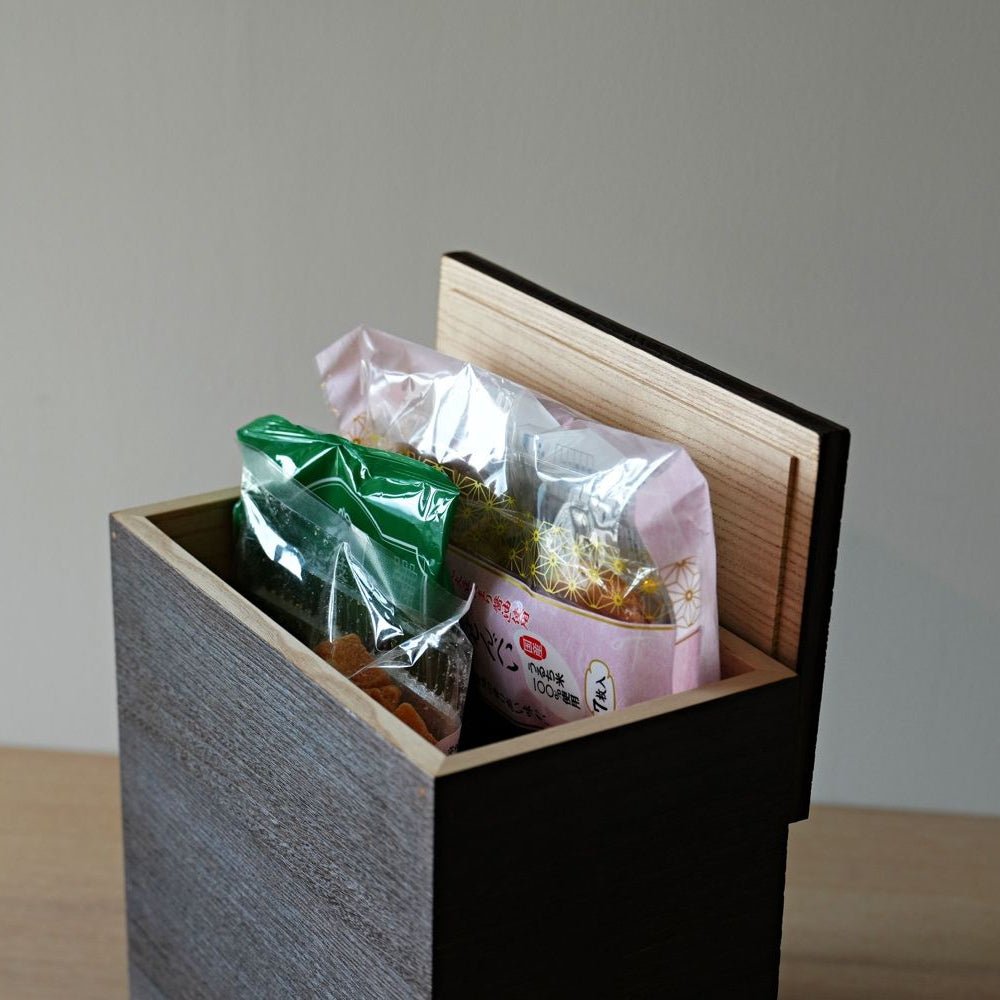
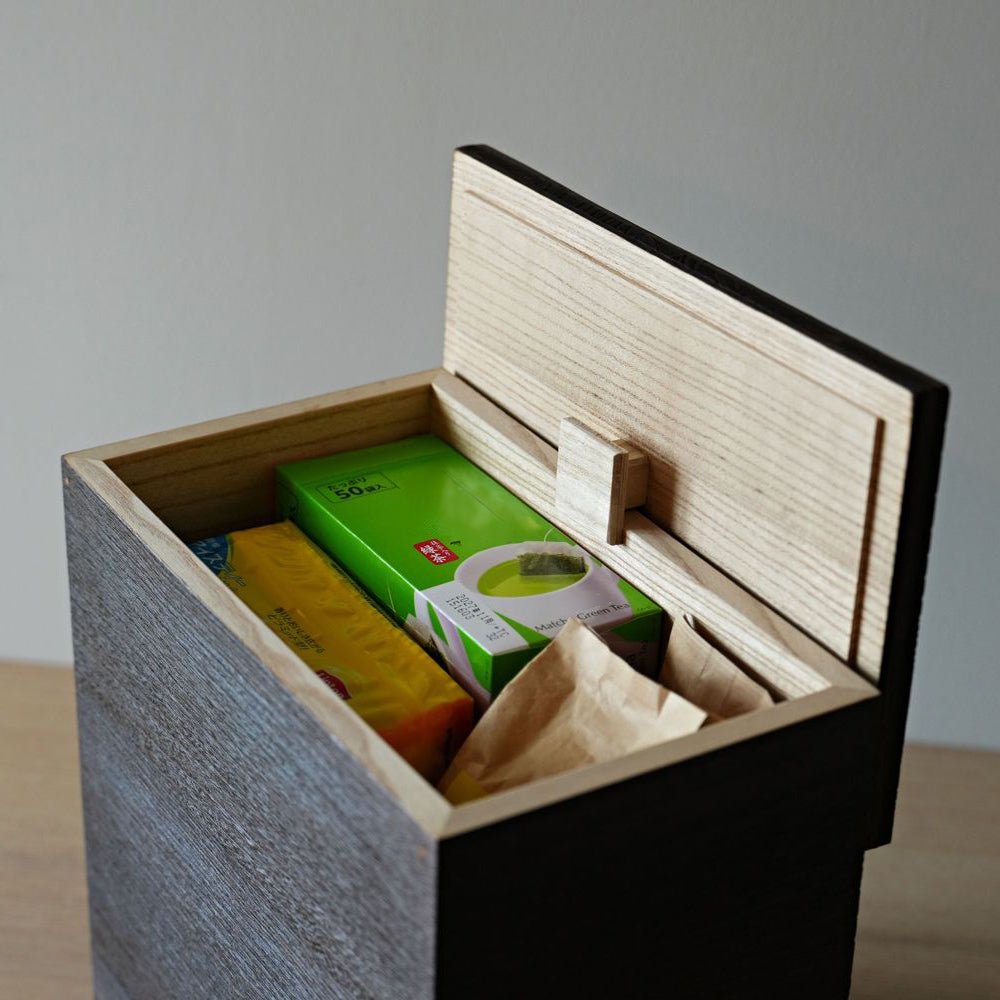
Also Ideal for Storing Bread, Tea, Coffee Beans, and Sweets
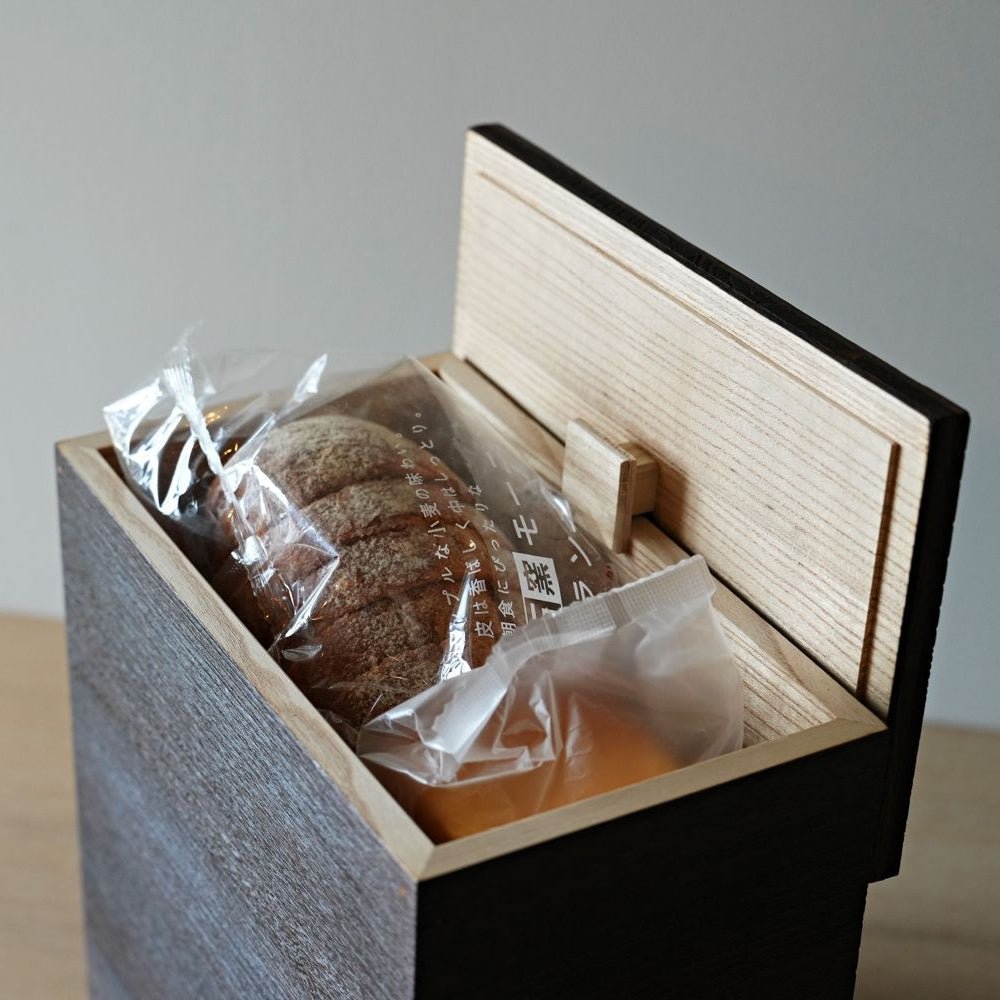
Suiho komebitsu isn't limited to rice — it also provides an excellent storage environment for bread, sweets, tea, coffee beans, and more.
We recommend using one as a rice chest and a second for other foods.

3. The Craftsmanship Behind Suiho Komebitsu
The Beautiful Finish Created
by Charring the Paulownia
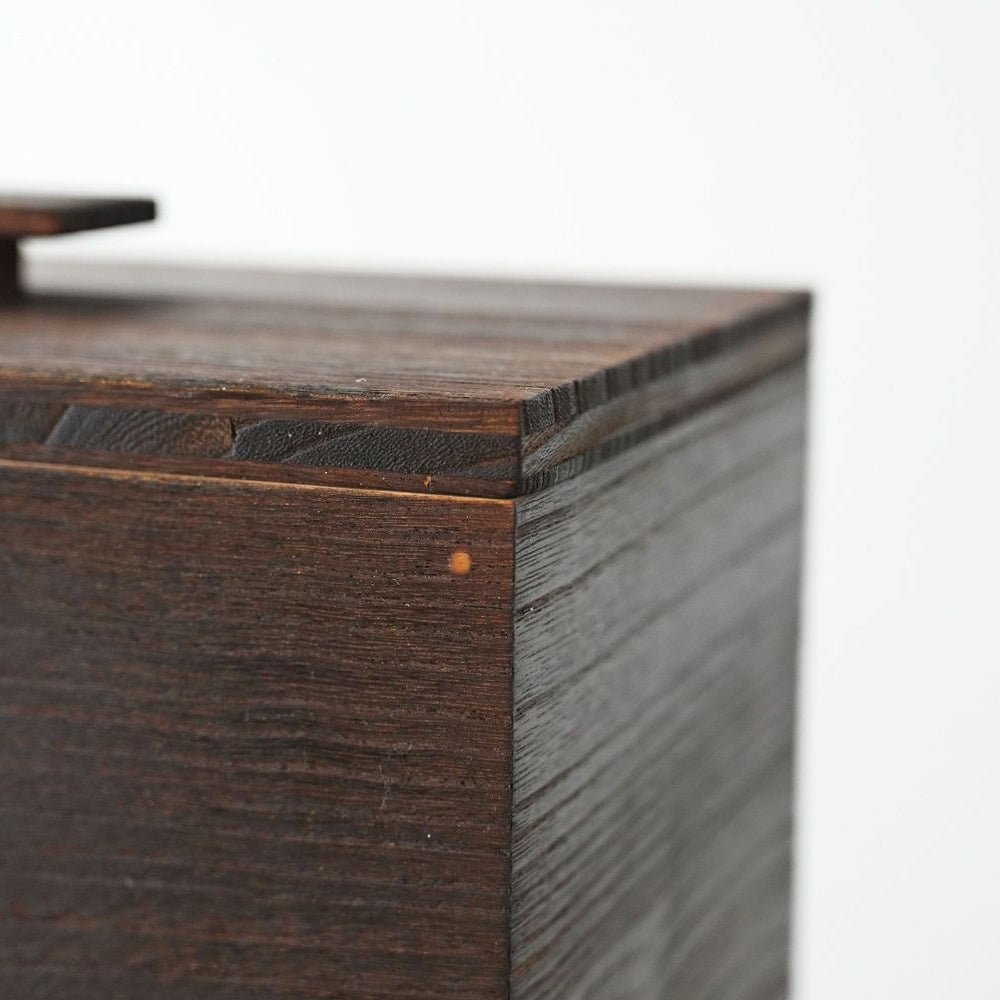
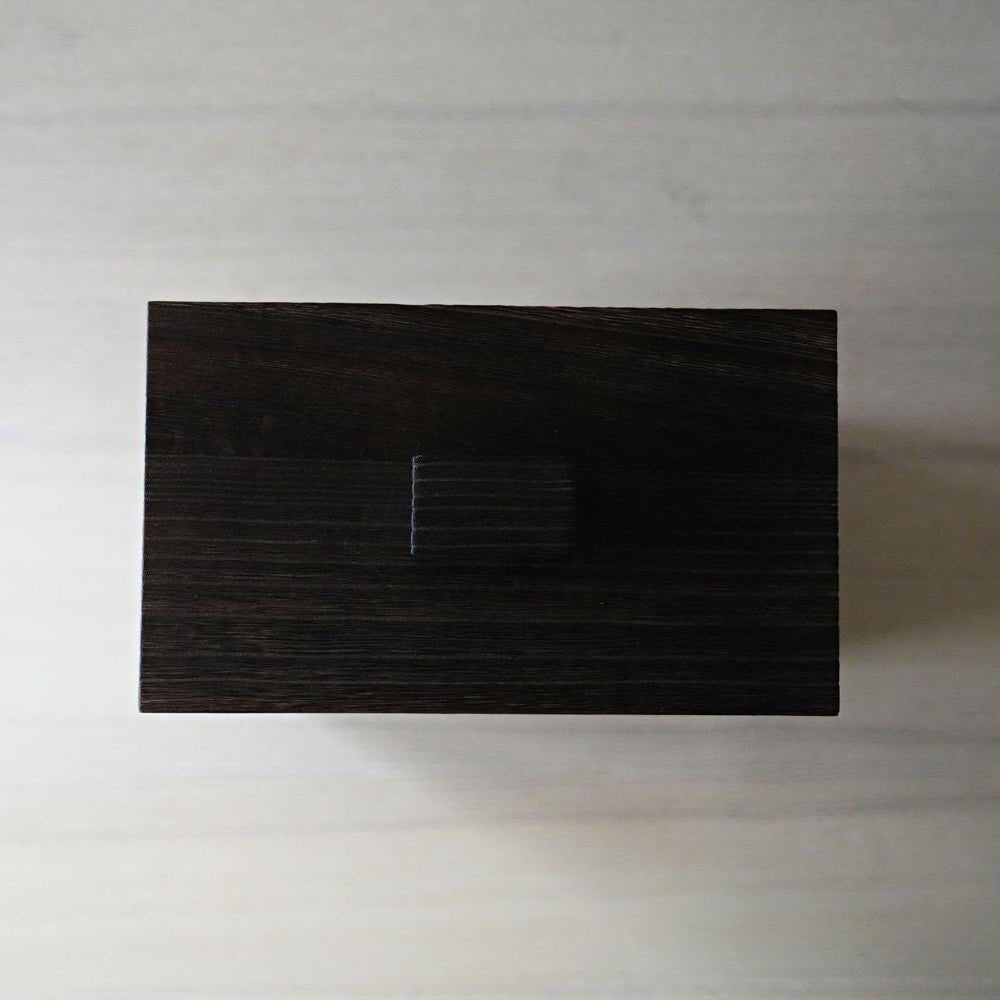
Suiho komebitsu's entire exterior is charred with a burner in a technique called "yaki-giri" (charred paulownia finish).
Paulownia is an unusual wood — it resists heat transfer, yet chars easily on the surface. That's what allows the surface alone to be charred deeply.
The beautiful shading and grain created by this process differ from piece to piece, fitting naturally into any kitchen.


Thicker Panels for
Better Function and Beauty
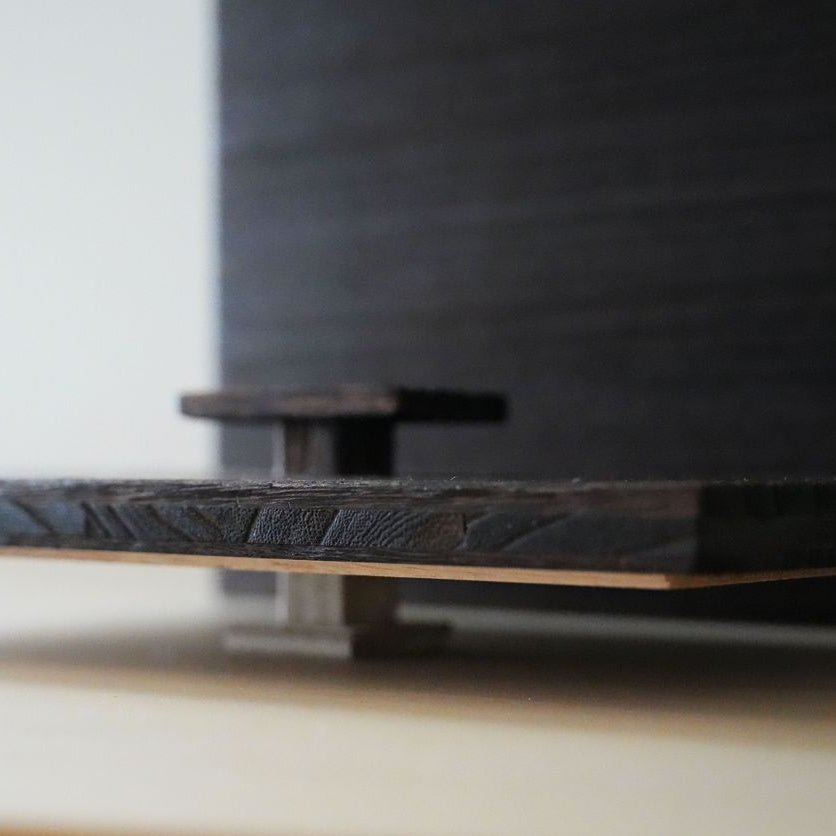
Paulownia panels tend to warp when charred. The lid, in particular, has a large surface area, so a standard thickness can't be fully charred.
That's why the lid panel on Suiho komebitsu is made thicker before charring.
Measurements also show that with wooden boxes, the thicker the panel, the less outside humidity changes are transmitted inside※.
※From research on wooden storage boxes published in "Bunseki Kagaku" (Analytical Chemistry), Vol. 74 (2025), The Japan Society for Analytical Chemistry
4. Made Using the Same Techniques as Traditional Crafts
Mitered Joinery, with No Metal
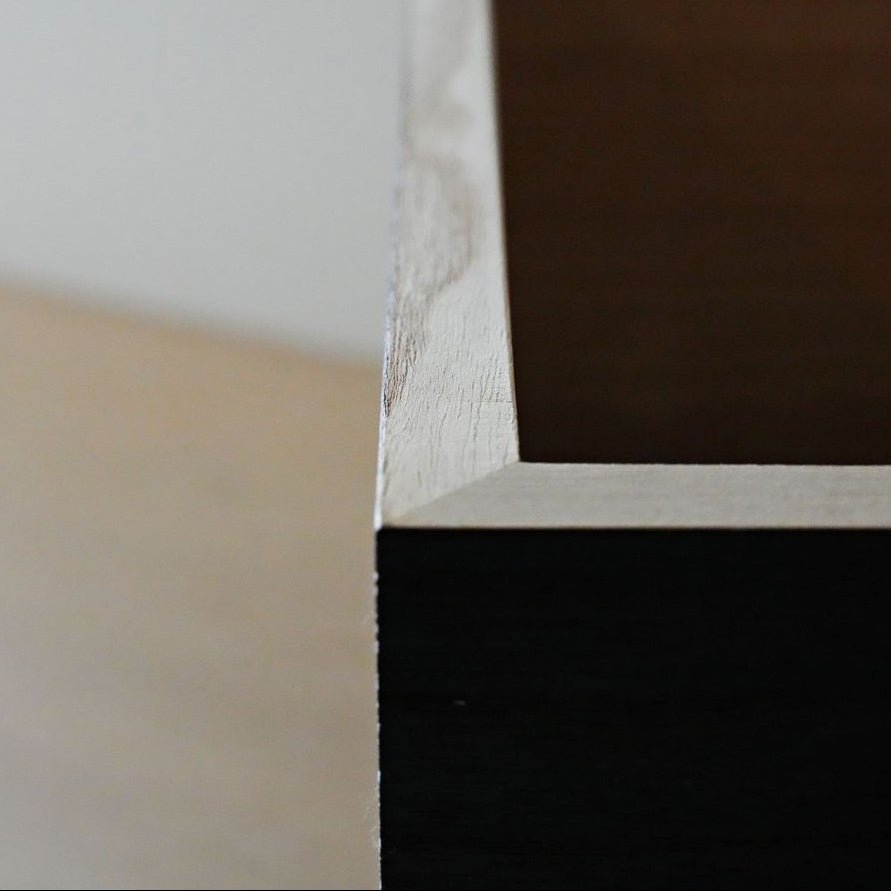
Suiho komebitsu is built using "tome-gumi" mitered joinery, where all four corners are cut at 45 degrees.
Wooden pegs are driven in by hand, one at a time, so as not to damage the soft paulownia or risk rusting in humid conditions.
Using wooden pegs and naturally air-dried wood is also an official requirement for Kamo paulownia chests to be designated a national Traditional Craft※.
※Designated in 1976 by Japan's Minister of International Trade and Industry (now the Minister of Economy, Trade and Industry)


5. Relentless Attention to Everyday Convenience
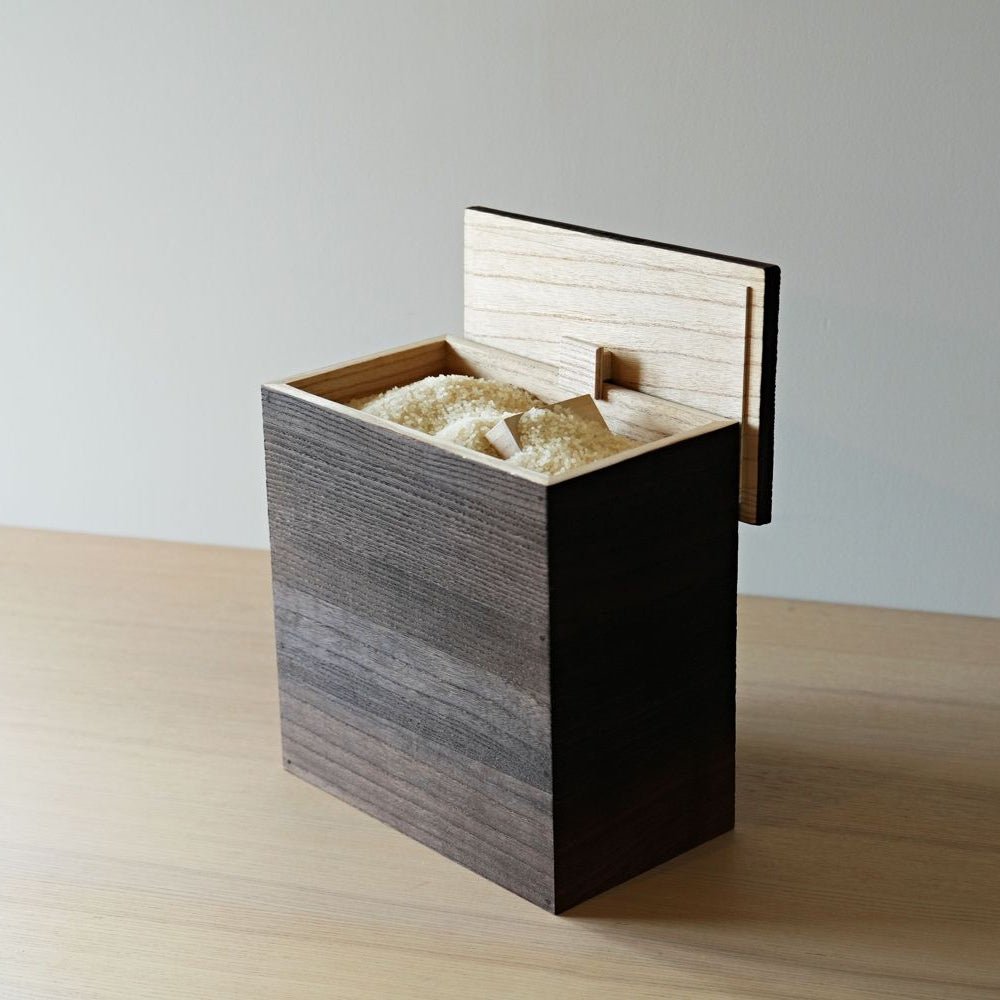
The Lid Hooks Onto the Body to Stay in Place
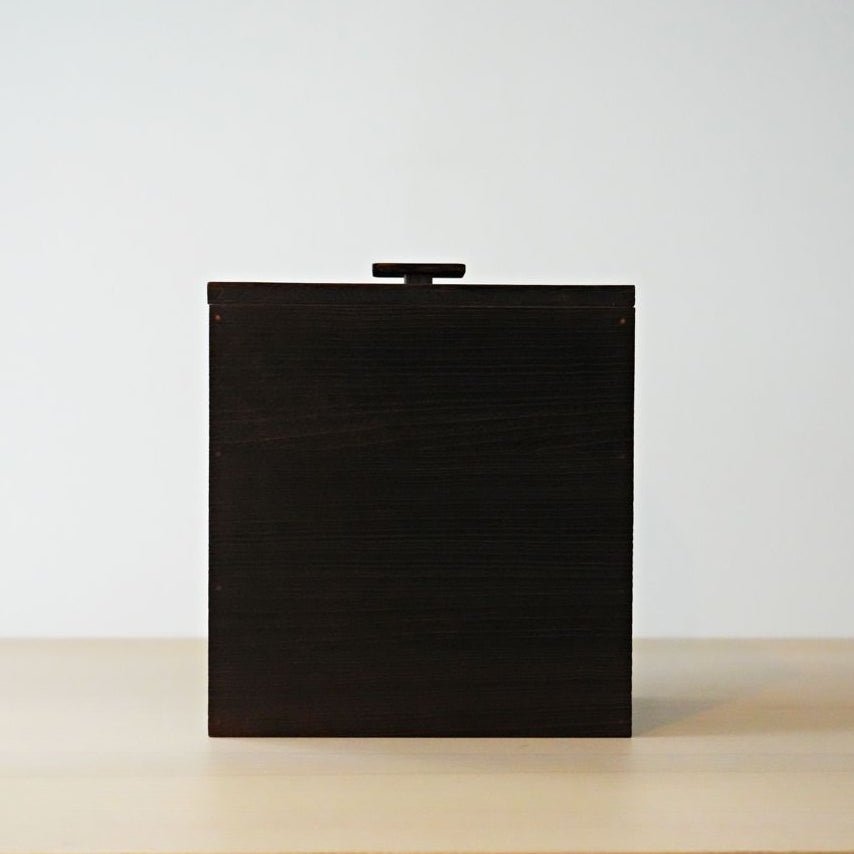
Suiho komebitsu's lid has handles on both sides so it can be hooked onto the body.
This reduces the hassle of opening and closing, letting you scoop rice smoothly with the included 1-go rice measuring cup.

A Size That Makes the Most
of Your Kitchen Storage
Suiho komebitsu is designed with a tall, narrow shape.
This vertical design makes the most of tall kitchen storage spaces, leaving more room to store other tools alongside it.
Depth: 280mm
Width: 165mm
Height: 320mm (including lid)
Place of Production
Kamo, Niigata Prefecture
Suiho komebitsu is made together with a paulownia chest workshop in Kamo, Niigata Prefecture.
Kamo is a woodworking town that accounts for roughly 70% of Japan's paulownia chest production. It's the home of "Kamo Kiri-Dansu," designated a Traditional Craft by the Minister of Economy, Trade and Industry in 1976.
Suiho komebitsu is made by drawing fully on over 200 years of Kamo paulownia chest craftsmanship.

MADE IN JAPAN
Tashinam Craftsmanship, Made Alongside Japan's Artisans
Our mission is to enrich lives around the world through Japan's finest traditional craftsmanship.
We hope you enjoy this unparalleled piece, created together with paulownia chest artisans in Kamo, Niigata.
FAQ
Frequently Asked Questions
We accept the following payment methods.
Credit card (VISA, Mastercard, AMEX, JCB), Apple Pay, Google Pay, Shop Pay
If your payment doesn't go through, please check your card's expiry date and available balance, and contact your card issuer if needed.
Ships direct from Japan. Shipping is calculated at checkout.
Orders are typically dispatched within 3–5 business days. International transit time is separate and will vary by destination.
About Order Cancellations
At Tashinam, we do not accept cancellations after a pre-order or order has been placed.
Our team prepares every order with care so we can deliver a product you'll be happy with, and we appreciate your understanding.
If there is a defect with the product, please contact us via our inquiry form within 7 days of the delivery date.
It holds up to 5kg of rice.
Gently wipe off dust with a soft, dry cloth. For stains, dab gently with a soft, dry cloth rather than scrubbing.
Before adding new rice, we recommend airing it out in the shade for about half a day to release any absorbed moisture.
Paulownia has long been used as a wood that insects tend to avoid, but this is not an airtight container. We recommend storing it somewhere well-ventilated, away from heat and humidity.
※This is not a guaranteed effect.
It also works well for storing brown rice, grains, dried foods, and bread. The workshop that makes it even uses one for storing bread.
The charred surface has a clear protective coating applied. With normal use, the color will not transfer to your hands or the rice.
That said, it isn't very water-resistant, so if it gets wet, gently blot it dry with a soft, dry cloth.
A 1-go rice measuring cup is included.
As this is made of wood, it cannot be used in a dishwasher or dryer. Please also avoid washing it with water, and avoid handling it with wet or dirty hands.
We recommend placing it somewhere well-ventilated, away from excess humidity. Please also avoid direct sunlight and heat from around the stove.
Yes. With the charred paulownia finish, variations in wood grain, how the panels are joined, and how the flame takes hold mean each piece has slightly different shading. Rather than a uniform charred tone, you may notice some areas with a brownish hue. Please enjoy this as a natural expression unique to domestic paulownia.
The exterior's shading may change gradually over time. Please enjoy this as a natural change unique to real wood, as something that develops the more you use it.
The lid is built with a small amount of play, so it will not get stuck shut due to humidity.
Depth: 280 mm / Width: 165 mm / Height: 320 mm (including lid)
Holds 5 kg of rice.

For customers who'd like to try before they buy
Our Store in Tokyo
Our permanent store where you can try Tashinam's kitchen tools, including the KANZEN Knife, with real ingredients. Feel the weight and blade length for yourself before you choose.
Address: Tashinam Jiyugaoka, 2-11-16 Jiyugaoka, Meguro-ku, Tokyo
Kosugi Building 1F, Unit C
1 min walk from Jiyugaoka Station (Tokyu Toyoko Line / Oimachi Line)
Hours: 12:00–18:00 / Closed Wednesdays