
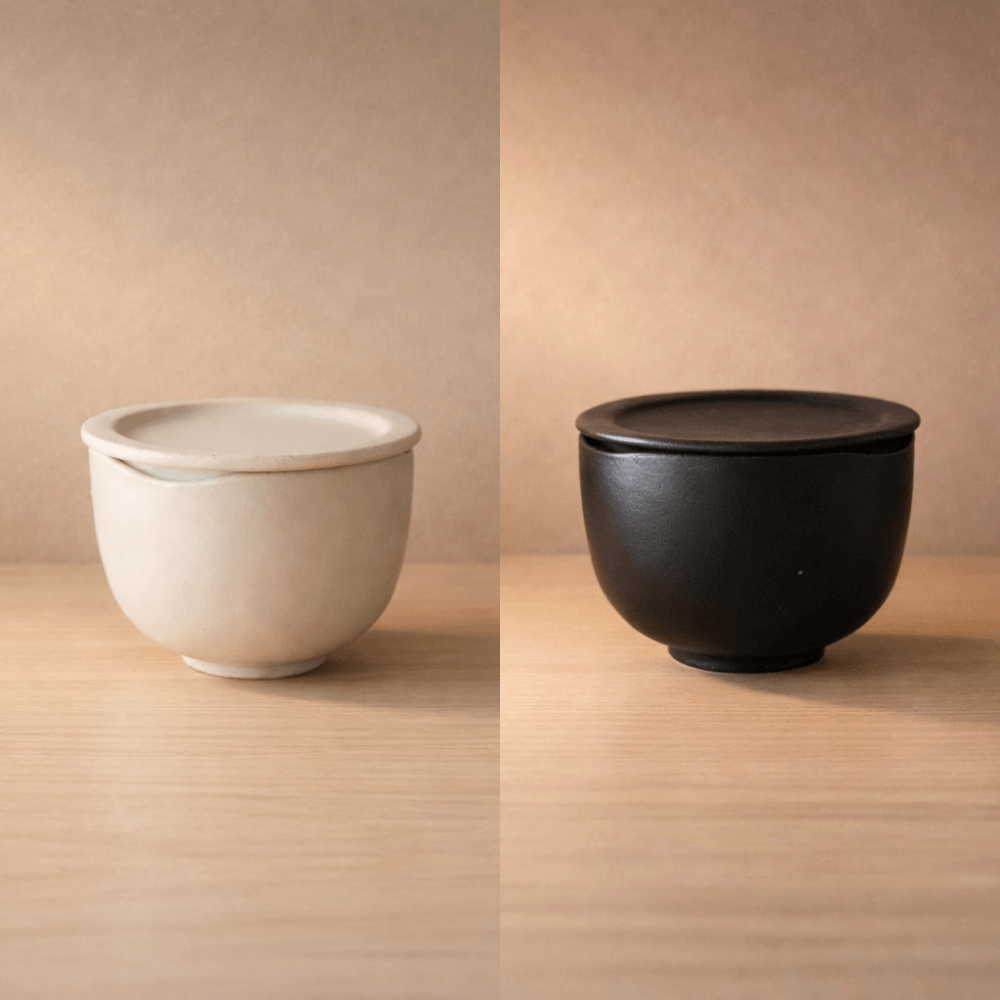


Musubiwan — Mino Ware (Set of 2)
Tax included.
The moment of steaming becomes a special experience
These top-quality steamers are individually crafted by artisans in Gifu using cypress and wild cherry wood harvested in Japan.
Width: 127mm
Height: 94mm (bowl + lid)
Weight: 538g
Made in: Toki, Gifu, Japan
すぐにお届け
Choose options
Experience
Musubiwan rewrites
the rules of microwave cooking
The “Musubiwan — Mino Ware” is a bowl that brings beauty and delicious results to microwave cooking.
Bland plastic-wrap reheating becomes true steamed cooking — steam rising the moment you lift the lid.
Serve it straight to the table; cover leftovers and into the fridge. Steam, serve, keep — one bowl, three roles.
Even handier with two or more
Better value in multi-bowl sets

1. Just cut, fill, and microwave
Steamed dishes in minutes — a microwave stand-in for the seiro
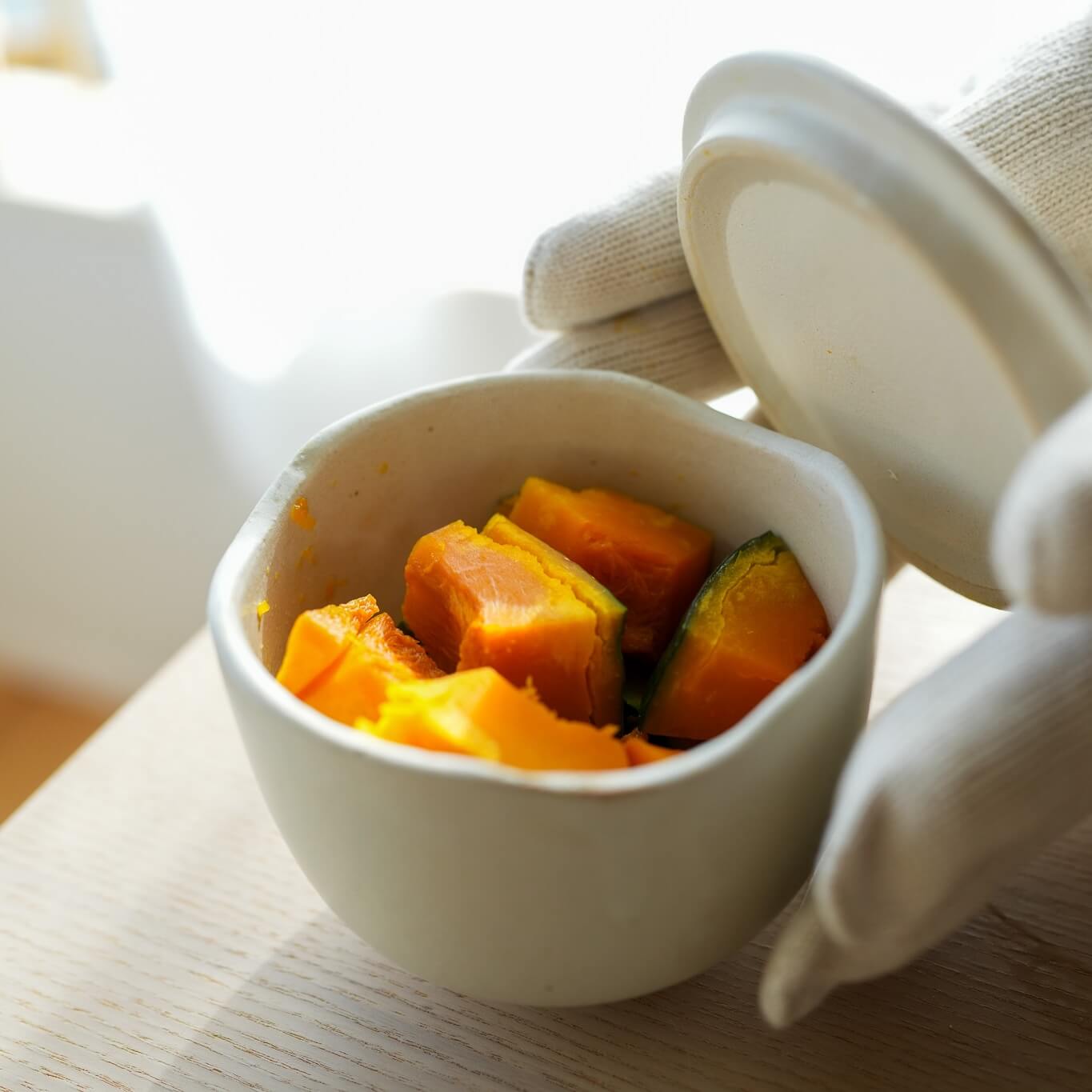
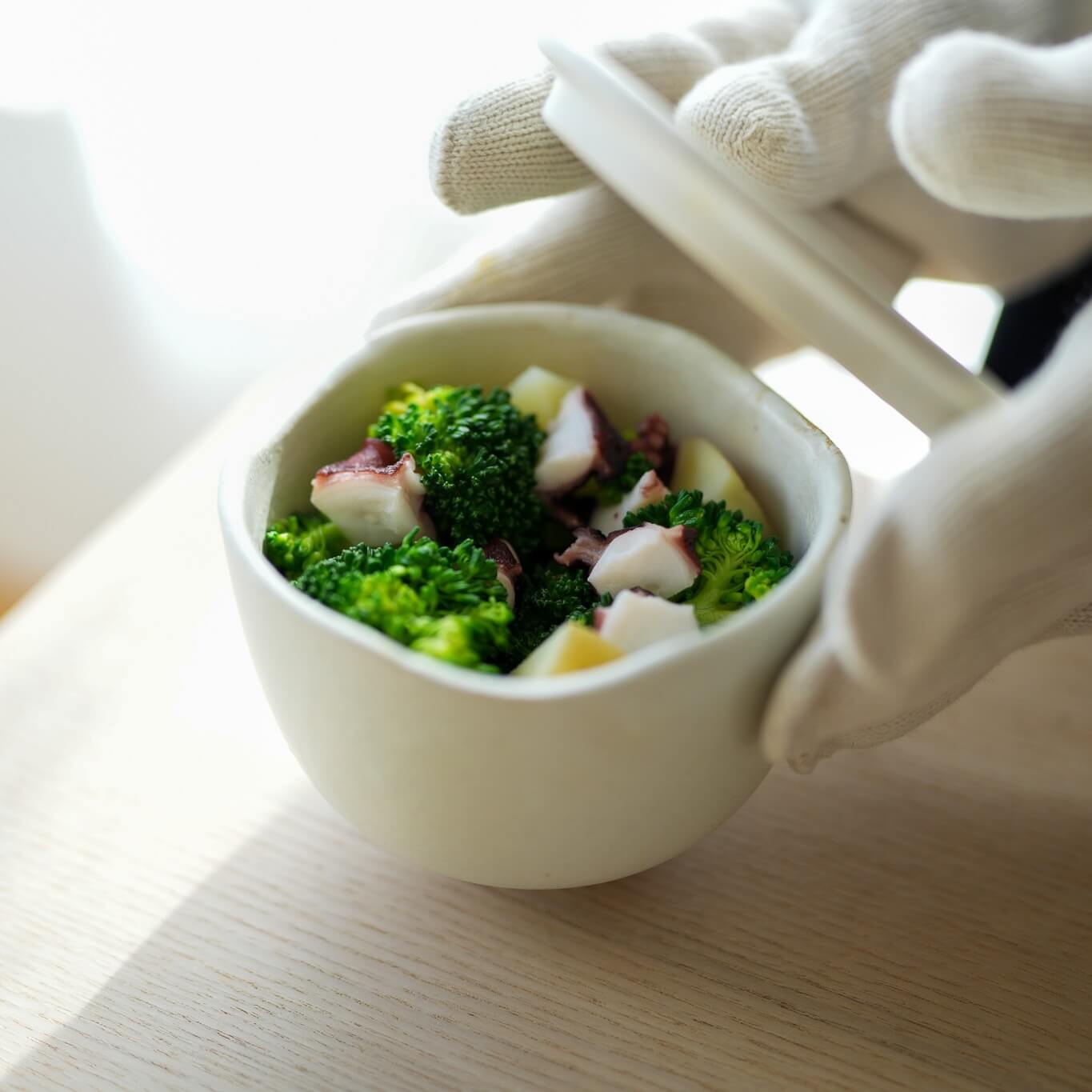
Put ingredients and a little water into the Musubiwan, cover, and microwave.
A few minutes later, your steamed dish is done.
When there’s no time for a seiro, or you just want a quick vegetable side, the Musubiwan makes steaming effortless.
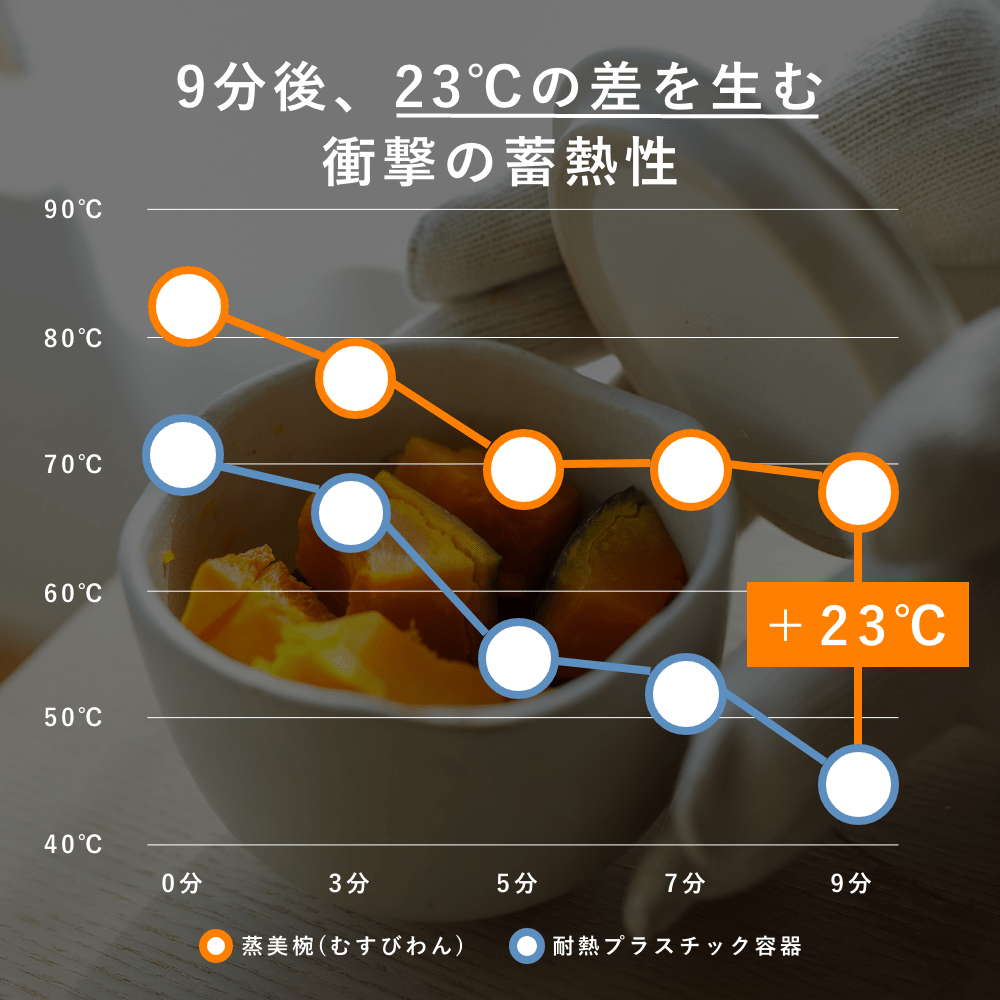
A 23°C difference after 9 minutes —
astonishing heat retention
We heated broccoli at the same wattage for the same time and measured temperature after removal.
After 9 minutes, the contents of a heat-resistant plastic container had cooled to 45°C, while the Musubiwan still held 68°C.
The mass of Iga clay and the insulating layer formed by countless pores deliver that stored heat slowly and steadily into the food.

Steamed cooking, made possible by Iga clay
The bowl is made from clay from Iga, Mie.
Its countless pores store moisture and release it as steam during heating, enveloping and steaming the food.
It prevents the dryness and uneven heating typical of microwave cooking, for a plump, tender finish.

2. Beauty replaces the sterile container
Mino ware beautiful enough
to go straight to the table
Heat-resistant bowls and plastic containers are convenient, but served as-is they can look like you cut corners.
The Musubiwan is a Mino ware bowl.
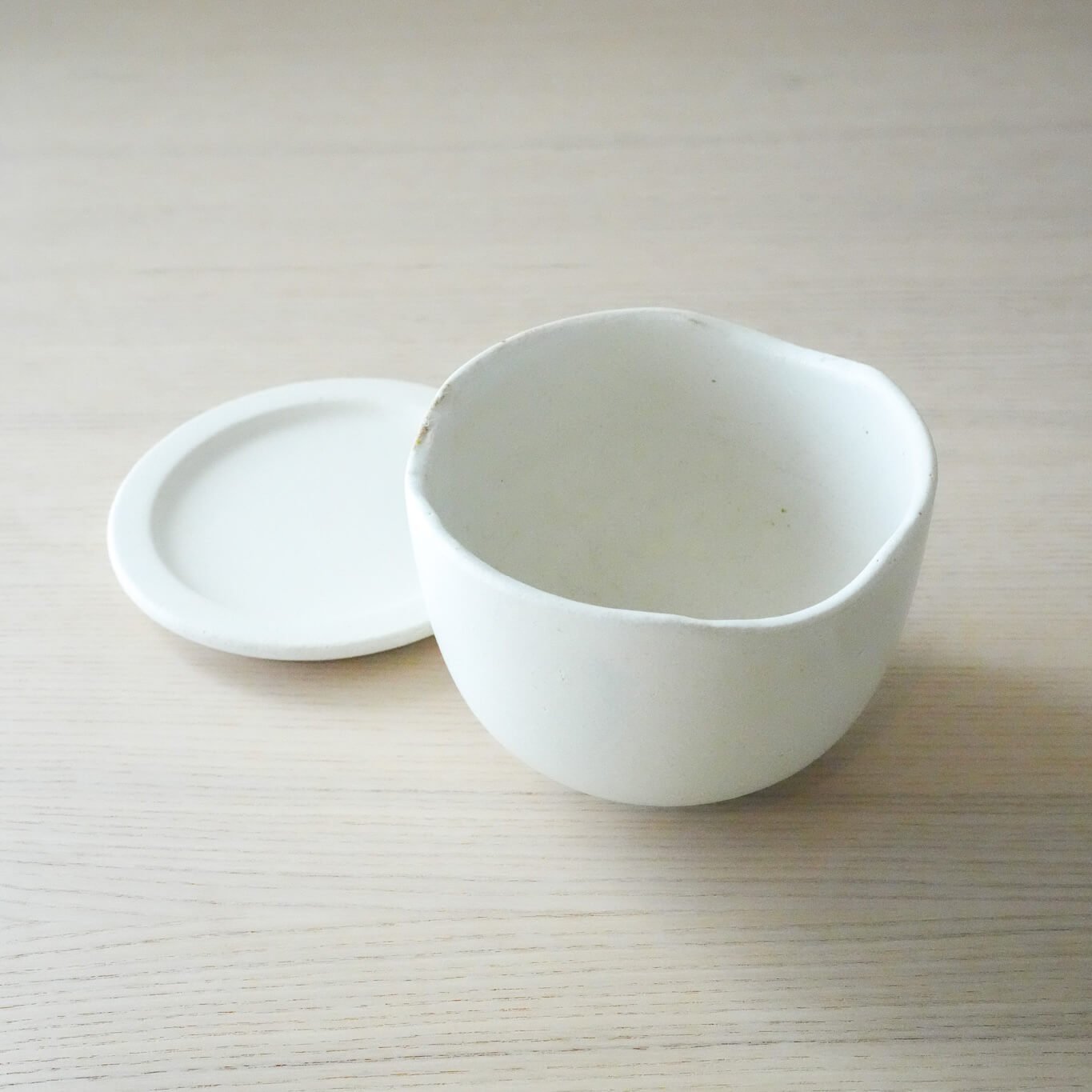
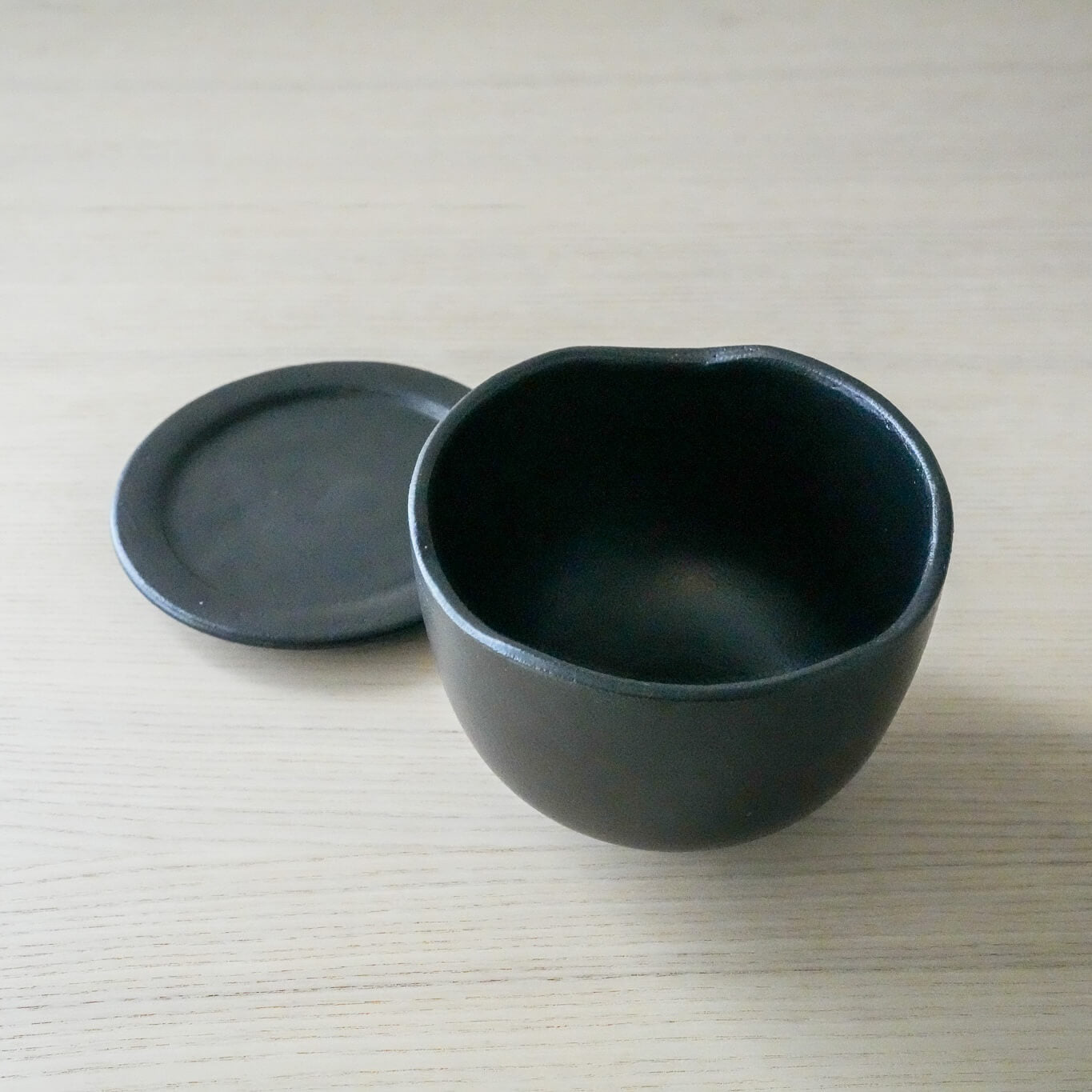
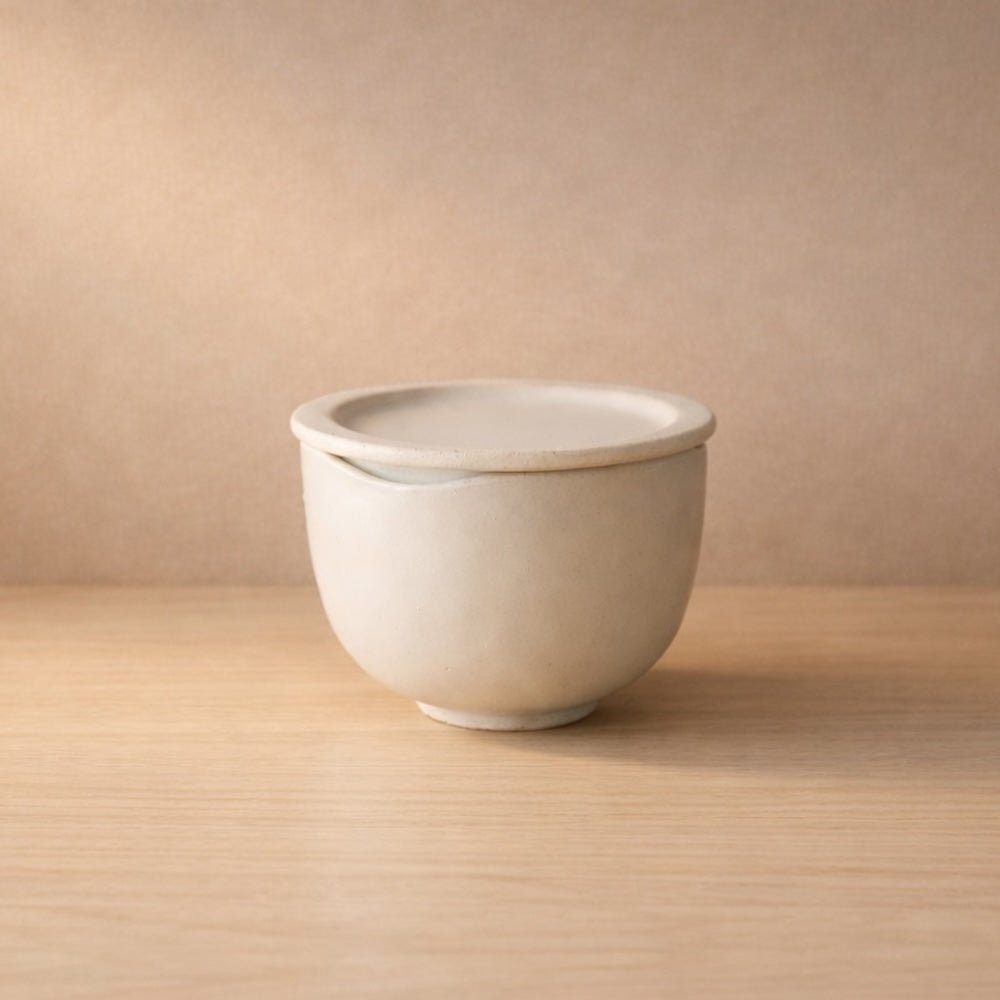
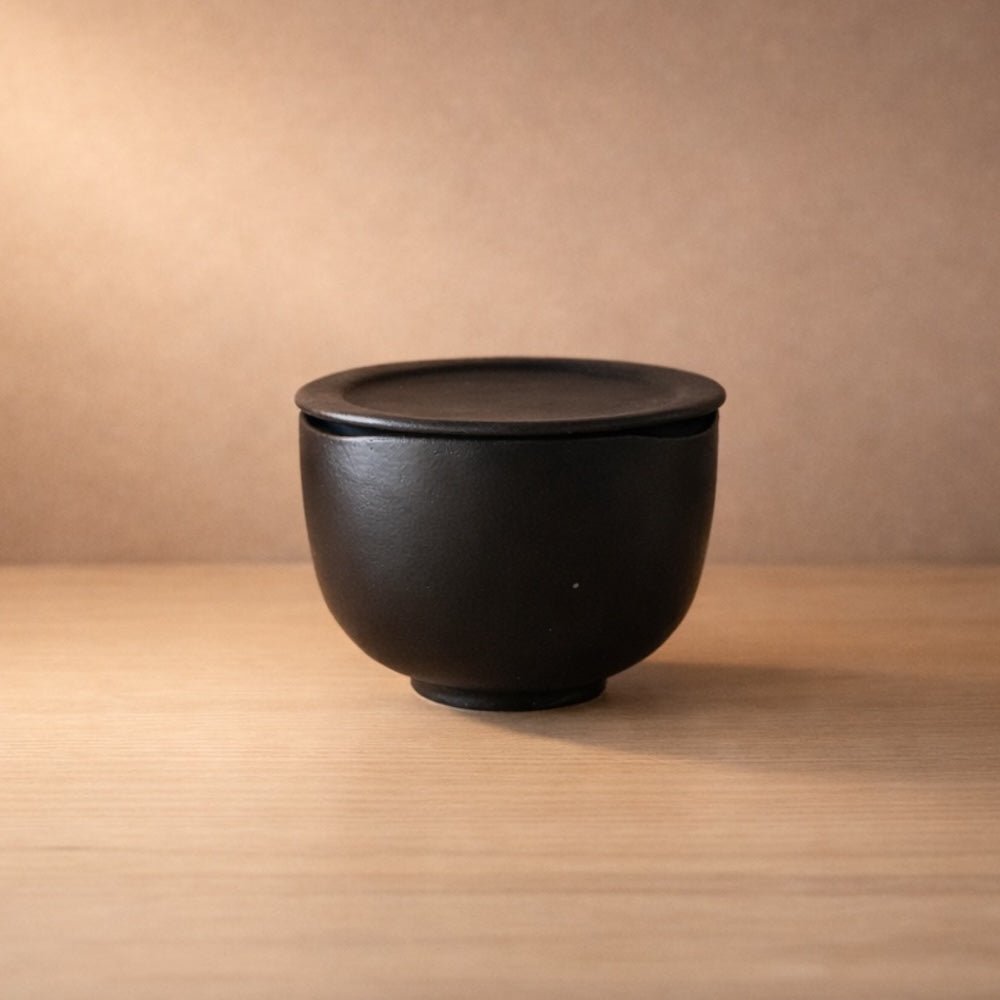
The Natural color is crisp and flatters your ingredients; the Sumi Black has a calm, composed presence.
The simple act of lifting the lid becomes the moment you present the dish.


The beauty of Musubiwan graces the table
Plastic heat-resistant containers often leave the table feeling a little plain.
The Musubiwan brings a beauty to the table that ordinary containers simply don’t have.
It comes in two colors — Natural and Sumi Black. Collect both and dress your table.

3. Clay that masters humidity and protects freshness
“Breathing clay” rewrites
the rules of food storage.
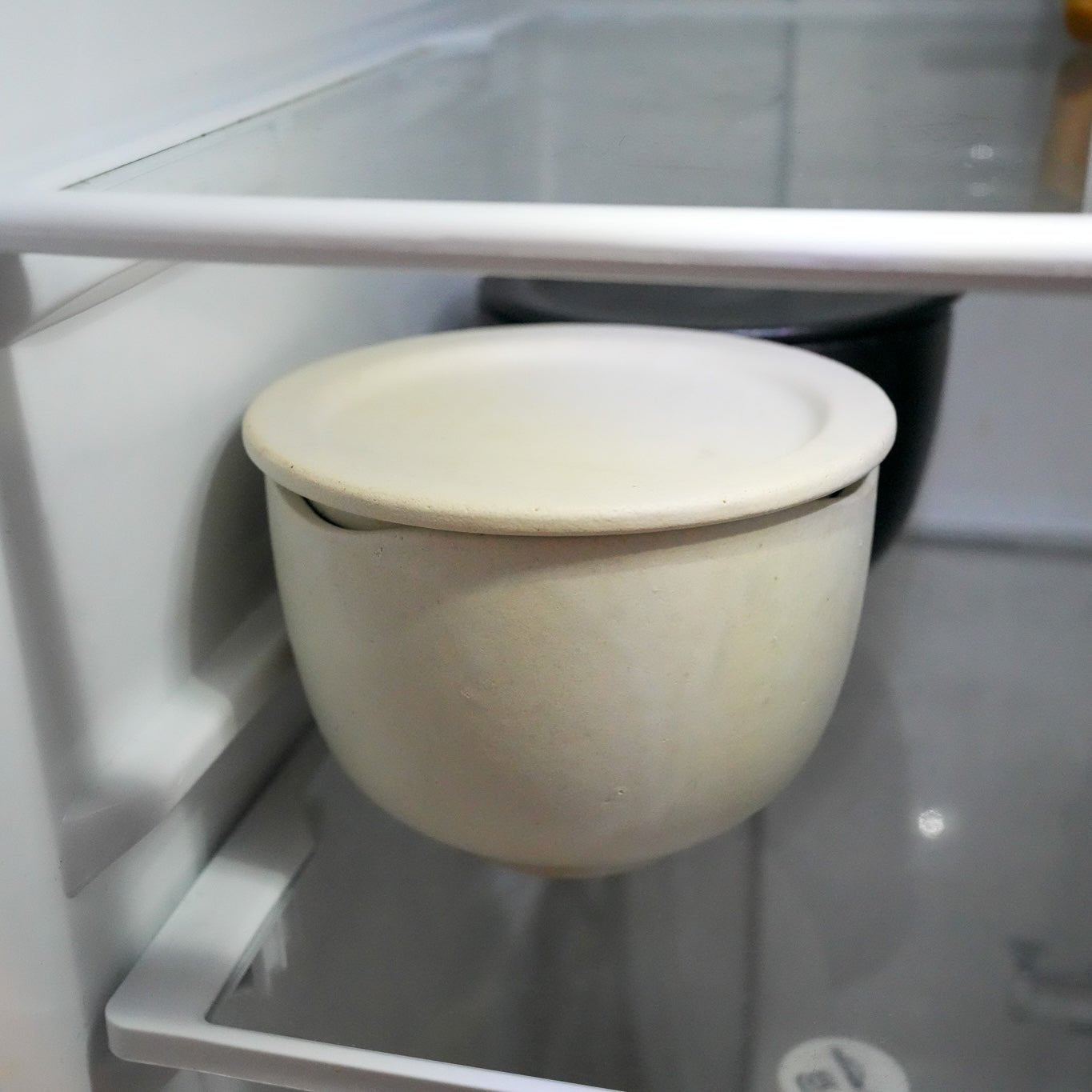
Cover leftovers and put them straight into the fridge.
Iga clay is called “breathing clay”: its pores absorb excess moisture and release it when things dry out.
Unlike a plastic container, no droplets form inside to turn your food soggy.
The texture stays close to freshly made, even the next day.

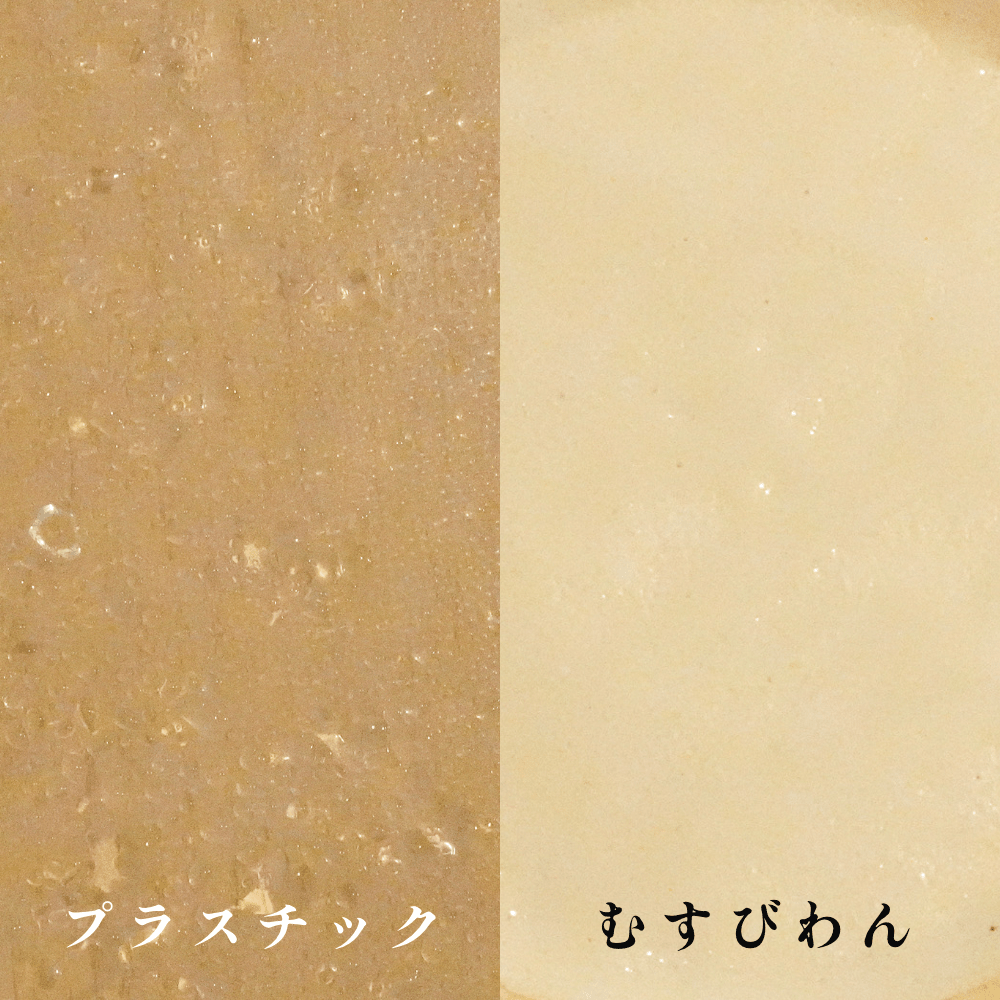
Humidity-control test results
We stored steamed bean sprouts in a plastic container and in a Musubiwan, covered, in the fridge for 8 hours.
The plastic container’s lid was covered in fine droplets.
The Musubiwan’s lid, by contrast, showed almost no condensation — the countless pores of Iga clay absorb excess water vapor inside.
It prevents the sogginess caused by moisture condensing on the lid and dripping back onto the food.
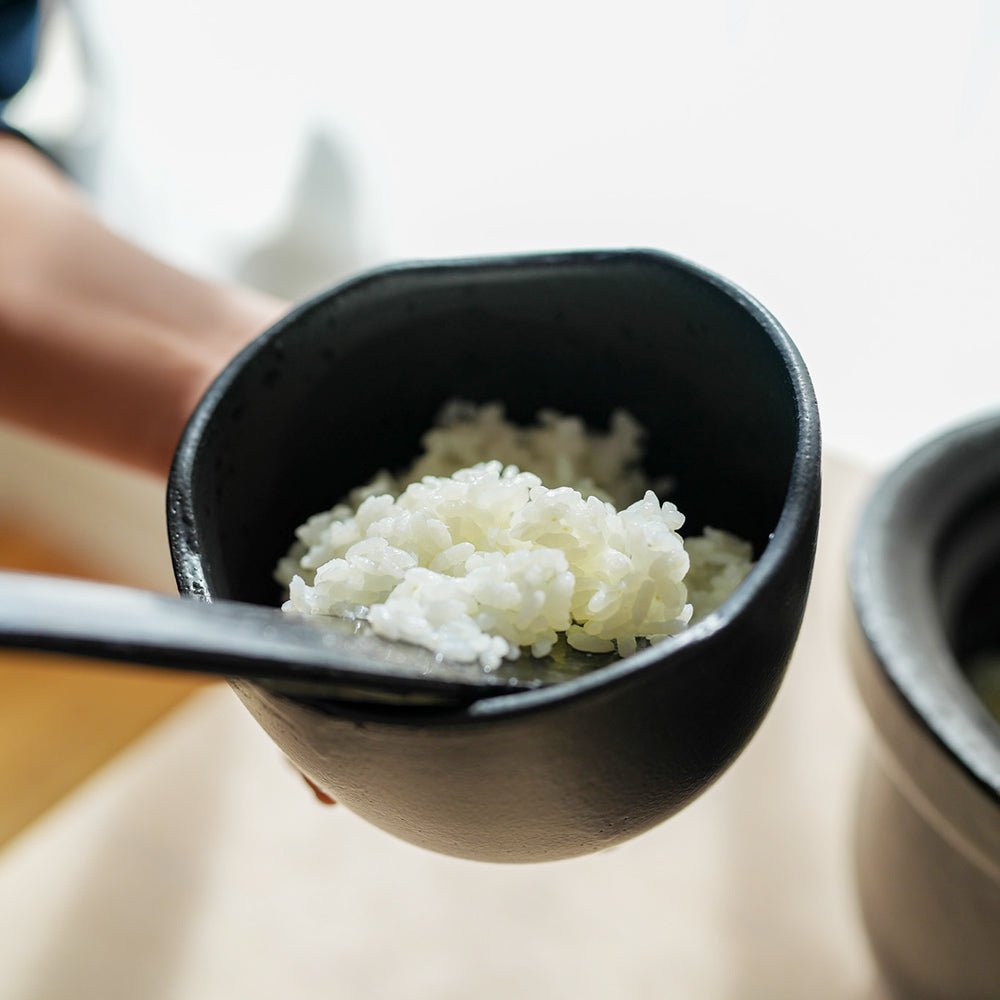
As a rice ohitsu, too
Well-cooked rice finds its best keeper in the Musubiwan.
Store leftover rice in it, warm it in the microwave the next day, and it revives with that freshly cooked taste.
4. Simple to use
1. A few minutes in the microwave
Cut your ingredients bite-size and place them in the Musubiwan.
Add 1–2 tablespoons of water, cover, and microwave.
That’s all it takes for a freshly steamed dish.

2. Approximate heating times by ingredient
Heating times vary by ingredient. Use the guide below and adjust to your liking.
Tender vegetables (bean sprouts, cabbage, spinach, asparagus): 1 tbsp water / approx. 2–3 min at 500W
Fluffy vegetables (broccoli, kabocha, eggplant, bell pepper): 2 tbsp water / approx. 3–4 min at 500W
Slow-steaming vegetables (sweet potato, carrot, potato, lotus root): 2 tbsp water / approx. 4–6 min at 500W
Adjust the steaming to taste, then drain excess water from the drainage notch.
3. From microwave straight to the table
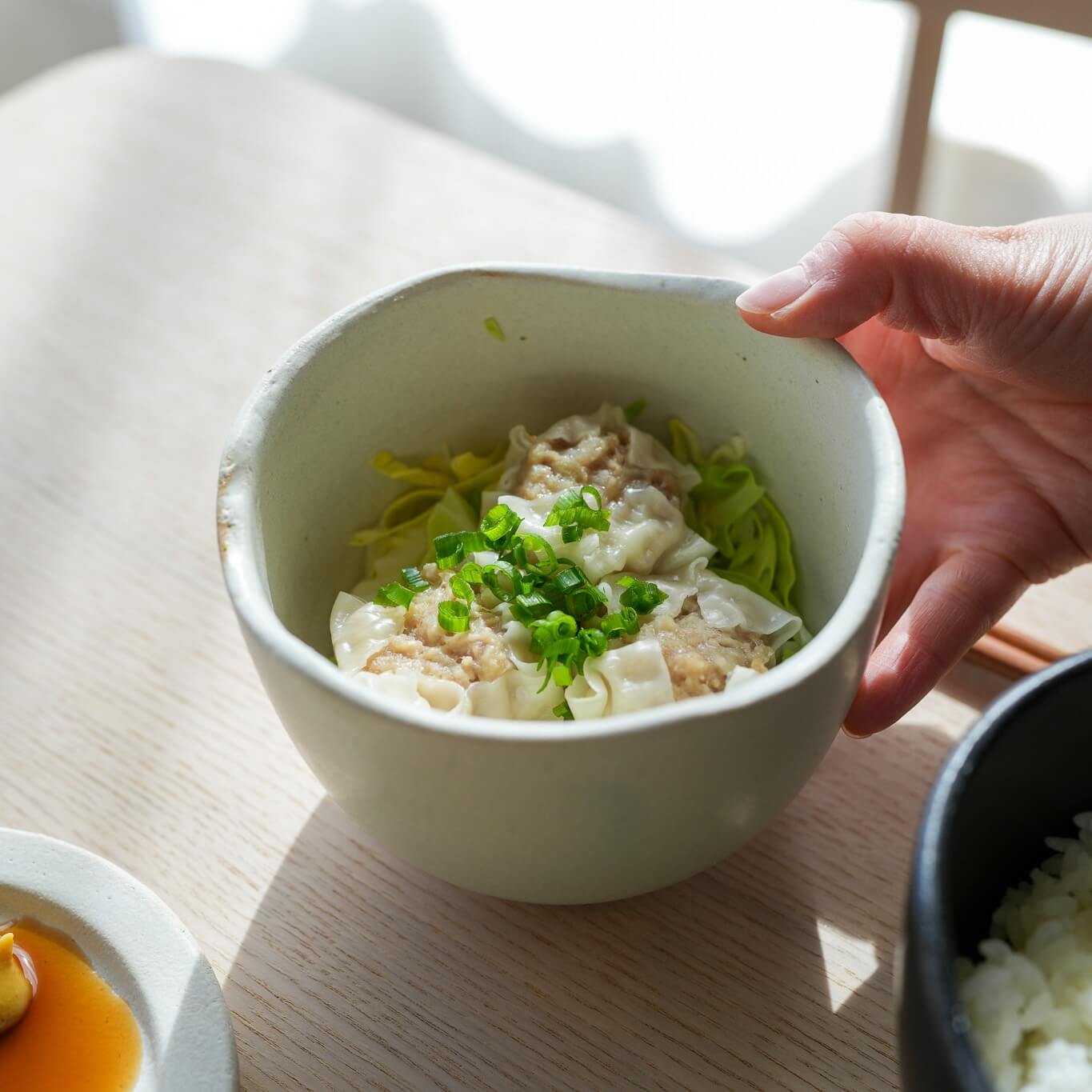
Once steamed to your liking, take it straight from the microwave to the table.
The Musubiwan dresses your table beautifully.
Season to taste and savor a delicious steamed dish.

4. Leftovers go straight to the fridge
If food is left over, cover it and store it in the fridge as-is.
The Musubiwan regulates the humidity inside, keeping food delicious without turning soggy.
The next day, warm it in the microwave and enjoy.
Handy ways to use the notches
1. Drain water instantly from any of three notches
The Musubiwan’s signature notches have many handy uses.
With three notches, you can find a drainage point instantly and pour off water even while the bowl is piping hot from the microwave.

2. Doubles as a chopstick and cutlery rest
During the meal, the drainage notch becomes a handy chopstick rest.
Thanks to the notch, chopsticks stay put without rolling off the bowl.

3. Cover it with a spoon still inside
When storing food mid-meal or after cooking, you can put the lid on with a spoon or fork still in the bowl — remarkably convenient.

Made in
Toki, Gifu, Japan
The Musubiwan was co-developed with a kiln in Toki, Gifu — the home of Mino ware.
We prototyped again and again in pursuit of the ideal shape for microwave steaming: the fit of the lid, the release of steam, the roundness that settles into the hand.
All of it rests on the kiln’s experience and handwork.
FAQ
Frequently asked questions
When heating
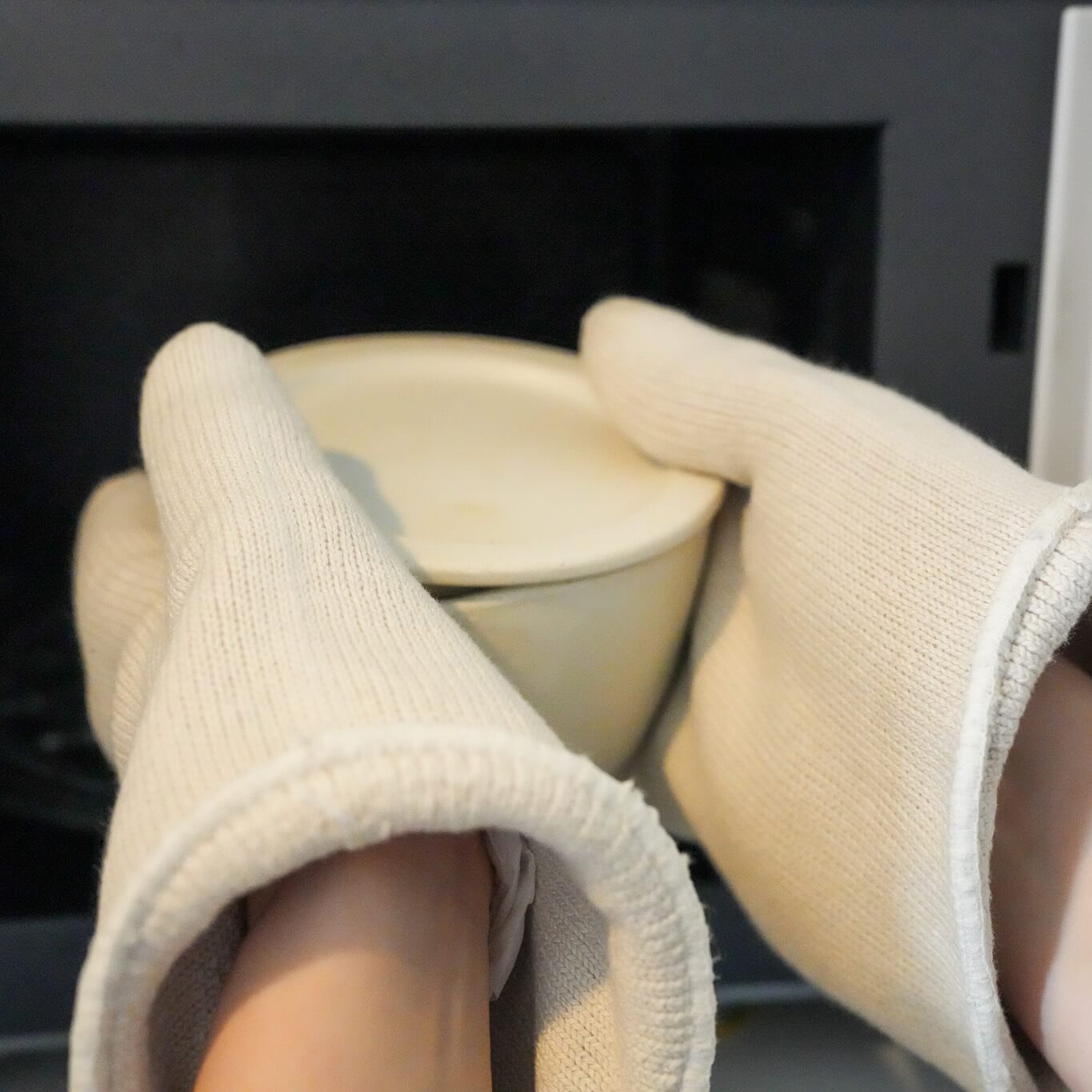
- The Musubiwan is designed so that Iga clay stores heat, so the whole bowl stays hot for a long time right after heating. Always use oven mitts or a cloth when removing it.
- It is sensitive to sudden temperature changes. Avoid rapid heating or cooling, such as pouring cold water on it right after heating.
Care
- Wash gently with a soft sponge and neutral detergent. Abrasive cleaners and metal scourers can damage the glaze and impair the pores.
- After washing, wipe off moisture with a soft dry cloth and dry thoroughly in a well-ventilated place before storing.
- Dishwashers can be used, but for a long life we recommend hand washing. If you do use one, take care not to pack it tightly with other dishes.
Aging
The Musubiwan changes expression the more you use it. Vegetable colors may transfer, and fine cracks (crazing) may appear in the glaze surface — neither affects use. These one-of-a-kind changes are proof that the vessel is growing with your table.
Breakage
- Take care to avoid chips and cracks from strong impacts.
- If cracks or fissures appear, stop using it for safety.
Individual differences
Each Musubiwan is finished by hand at the kiln, one at a time. Slight individual differences in color and shape are part of the charm of handmade work.
We accept the following payment methods.
1. Credit card (JCB, VISA, Mastercard, AMEX)
2. Smartpay (3 installments by credit card, no installment fees)
3. Apple Pay, Google Pay
If a payment fails, please check your card’s expiration date and available credit, then contact your card company.
*Installment and bonus payments are not available for credit card or Apple Pay — payment is a standard single charge, or installments via Smartpay.
*Bank transfer is not supported.
Shipping is free nationwide across Japan.
This product ships within 3–5 business days.
When your order ships, a shipping notice with a tracking number will be sent to your email address so you can check the delivery status.
Orders are shipped in the shortest time possible.
As a rule, we cannot accept cancellations after ordering, or returns and exchanges of this product for customer convenience.
In the case of a defective product, please contact us within 7 days of delivery via the contact form.